 Product we built · On-device AI
Sakinah: real-time AI that removes instruments and covers people on screen, on the device
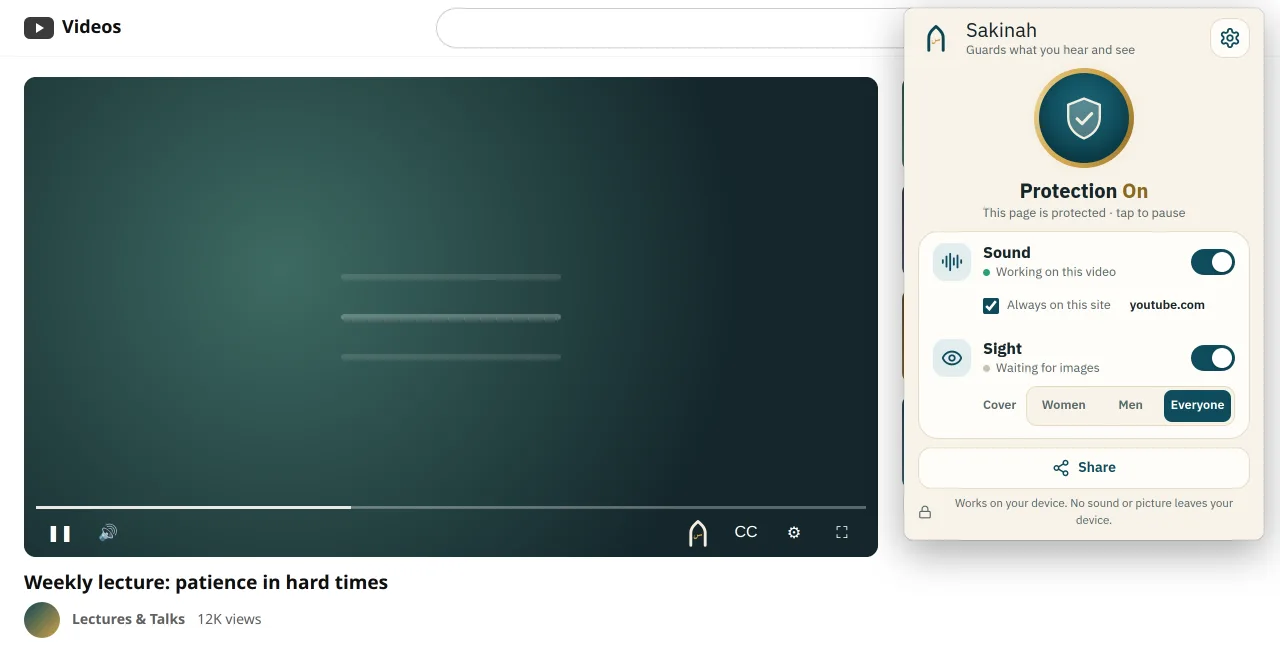
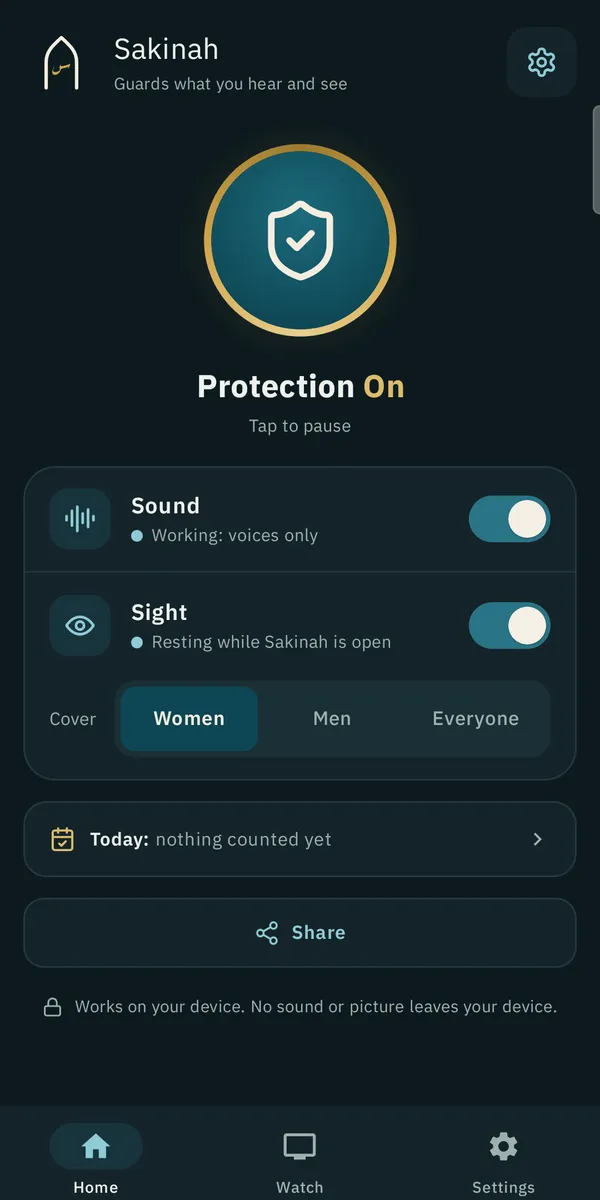
Two small models and one engine that run inside the browser, the phone and the desktop. Sound: speech stays, instruments go. Sight: people on screen are covered as the user chooses: women, men or everyone. No sound or picture ever leaves the device.
Visit sakinahguard.com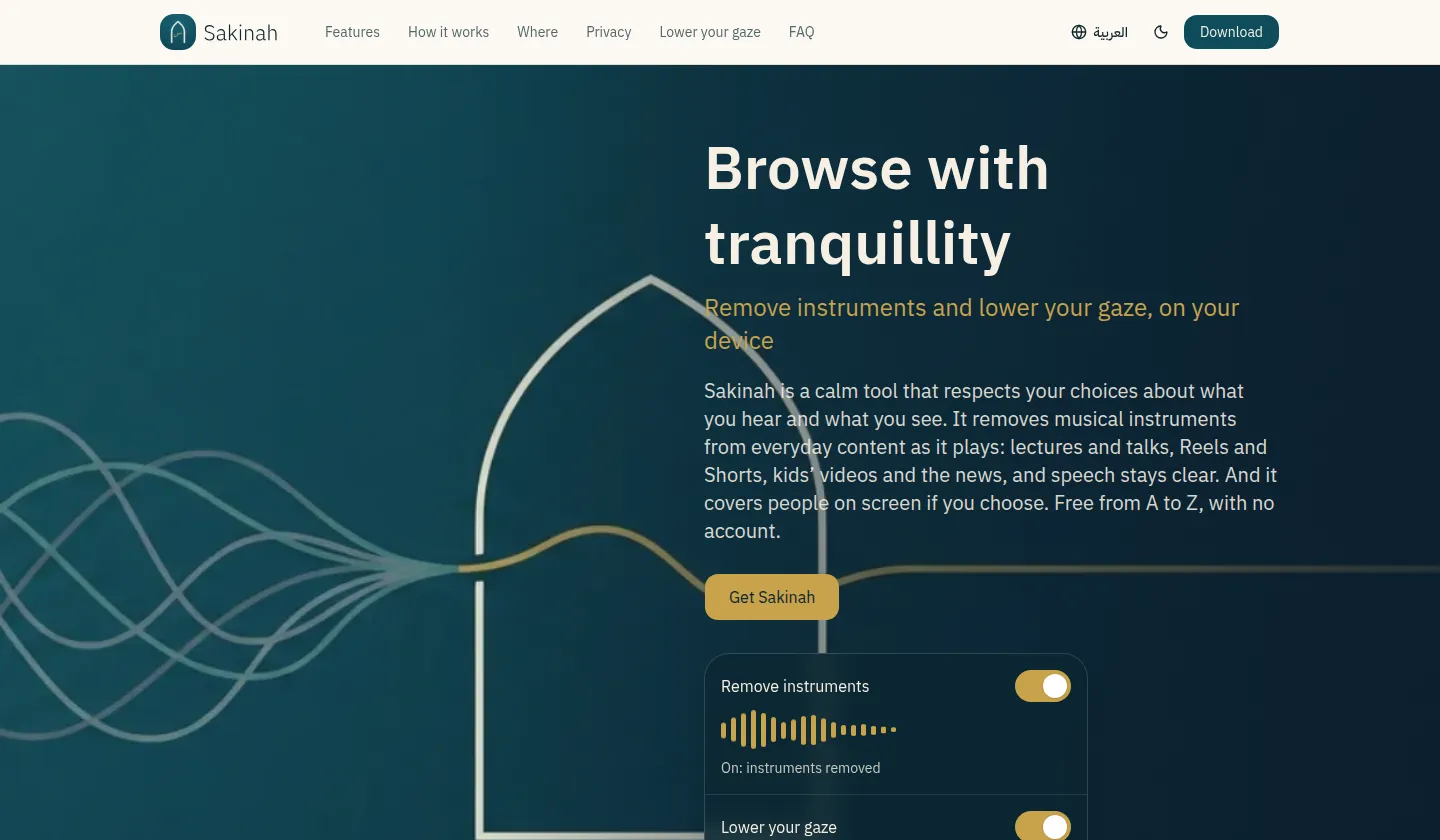
- Type
- Our own product, built end to end
- Features
- Remove music · Lower your gaze
- Privacy
- Processing on the device. Nothing recorded or sent
The problem
People who avoid music and want to lower their gaze had two bad options for everyday video: mute it and lose the speech, or skip it. Existing tools do one thing at a time, run in the cloud, or need the video uploaded or prepared first. None of them work live, on the device, on whatever the user is already watching.
What we built
Two small real-time models
One audio model keeps speech and everyday sounds and drops instruments, with two modes: remove music, or voice only. One vision model finds people on screen and tells the engine whom to cover. Both are small enough to ship inside a browser extension and fast enough for live playback.
One engine, every platform
A single Rust engine processes audio in 10 ms blocks. The same engine runs as WebAssembly in the browser, as a native library on Android, and as a library in the Windows and Linux apps. Each app is a thin shell around it.
Covers that follow the video
Opaque covers track each person as the video plays and scrolls. A person stays covered even when the model is briefly unsure, so a cover never flickers off. On faster computers the app picks a stronger model automatically.
Platform audio capture
Each platform needed its own way in: Web Audio and tab capture in the browser, system audio capture on Android, and per-app loopback on Windows.
Model protection
Both models ship encrypted and only open under the right store identity, so a copied package does not run. Each release carries its own watermark.
Website and store presence
A bilingual Arabic and English website with structured data and search-focused pages, plus store listings, screenshots and a demo video for Chrome, Firefox and Google Play.
The hard parts
Real time on budget phones
On a budget Android phone the engine processes 10 ms of audio in about 5.6 ms. That margin is what keeps the sound from stuttering while a video plays.
No doubled sound
Some Android phones cannot silence the original stream. On those, the app plays the original instead of risking two copies of the audio at once.
Privacy as a design constraint
Nothing is recorded or uploaded, there are no ads and no tracking, and the core feature needs no account. Recording the cleaned audio is blocked wherever the platform allows it.
Banking apps
Some banking apps close themselves when any screen-reading service is on. The phone app detects them and pauses its covers automatically, so people never have to choose between their bank and the app.
By the numbers
5
platforms live or in store review, from one engine
10 ms
audio block, processed in about 5.6 ms on a budget phone
0
bytes of sound or picture leaving the device
Measured on our own test devices.
Where it stands
Live on Chrome, Firefox and Linux. Android in a Google Play closed test. Windows in Microsoft Store review.
What this means for your project
On-device and edge AI
When data cannot leave the device, or the cloud round trip is too slow, we ship the model to the device and make it fast enough to run there.
Talk about on-device AIReal-time audio and voice
The same discipline of latency budgets, streaming audio and platform capture is what our voice AI work runs on.
See voice AICross-platform product builds
One core, thin shells, store releases on every platform: the way we build AI products that have to ship, not demo.
See AI product buildsNeed AI that runs where the data is?
A 30-minute call about your product and its constraints. Written plan and fixed price within 3 days.
Book a call